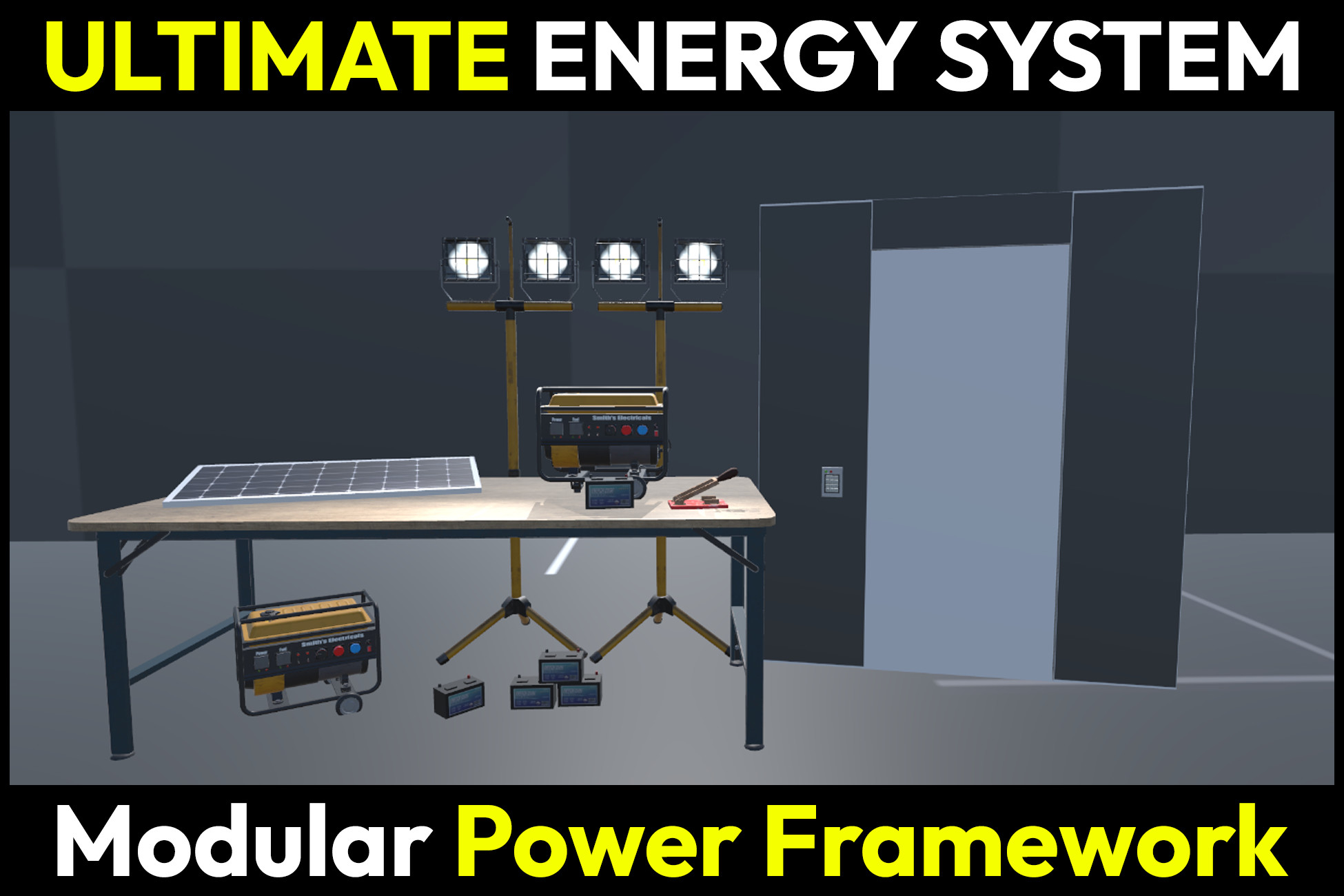
Screenshots and videos
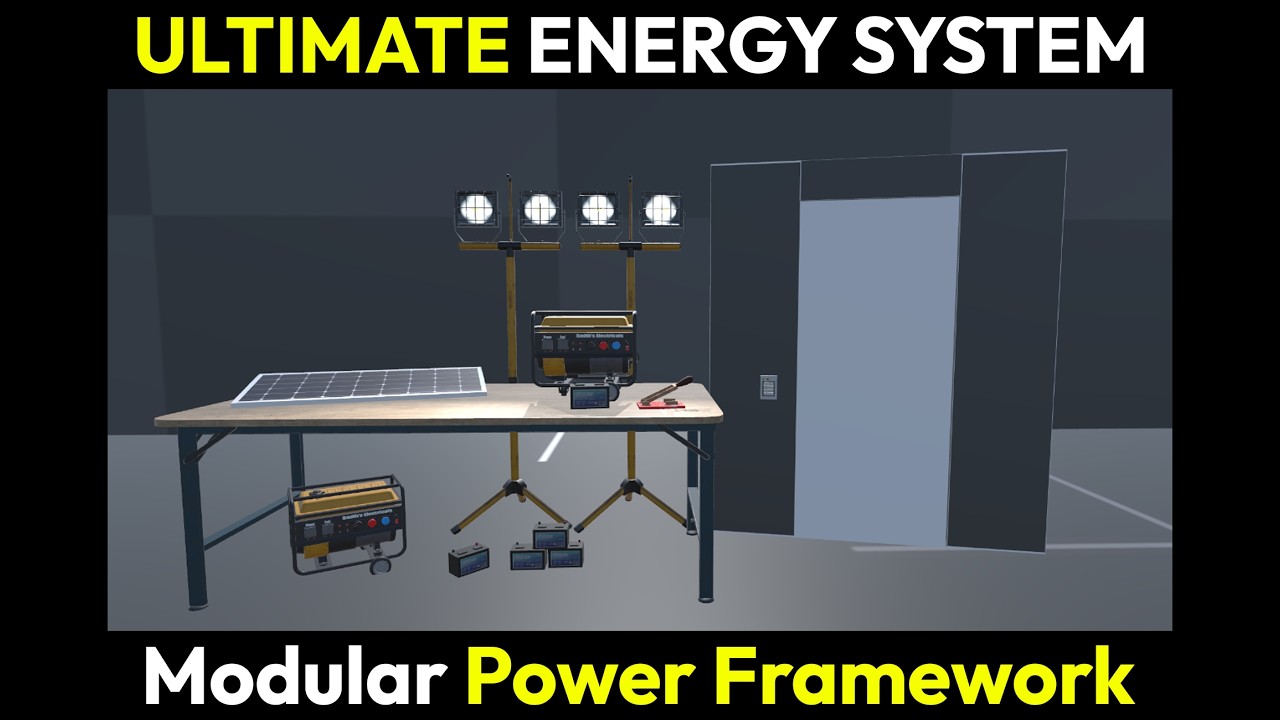 1 / 4


Price history
Lowest recorded standalone price: $29.99. Recorded observations span to . This is our available history, not a guaranteed all-time low. Bundle package prices are separate.
Standalone price
Last three months, in USD. Bundle prices cover the whole package.
About Ultimate Energy System – Modular Power & Wiring Framework
- Tools, Systems & Learning > Development Tools & Automation
Ultimate Energy System (UES)
Try the Interactive Web Demo on Itch.io:
Try demo
Documentation & Support
Documentation: https://doc.nogue.dev/docs/assets/ues
Community & Support: Discord (https://discord.gg/kbwnyGhYMP)
Ultimate Energy System (UES) is a modular, gameplay-focused power framework for Unity, designed for survival, automation, sandbox, crafting, simulation, and base-building games.
UES allows developers to create clean, predictable, and scalable power networks using generators, batteries, switches, sensors, splitters, combiners, fuse boxes, and fully interactive wiring systems — all without the complexity of real-world electrical simulation.
Built with gameplay first in mind, UES focuses on clarity, control, and extensibility.
Designed for Real Gameplay
UES uses a directional energy flow model:
• Generators push energy into the network
• Consumers receive energy from the network
• Distribution devices control and redirect the flow
• Logic devices control automation and behavior
This creates a system that is:
✔ Easy to understand
✔ Easy to debug
✔ Predictable during gameplay
✔ Safe to scale into large networks
✔ Flexible enough for automation-heavy projects
No hidden magic.
No unpredictable balancing.
Full developer control.
Core Features
Modular Energy Framework
• Directional power flow system
• EnergyNode architecture
• Input / Output / Passthrough / Signal ports
• Socket-based connection validation
• Loop/cycle protection
• Request & delivery-based energy handling
• Configurable max connections per socket
Energy Generation & Storage
• Fuel Generators
• Solar Generators (Simple & Advanced modes)
• Wind Generator
• Batteries with:
Capacity
Charge/discharge behavior
Efficiency
Input/output limits
Real-time status feedback
Power Distribution
• Power Combiner
• Power Splitter
• Smart Power Splitter with configurable outputs
• Fuse Box with overload/burn system
Logic & Automation
• Signal system
• Signal Switch
• AND Switch
• OR Switch
• XOR Switch
• LDR Sensor (day/night automation)
Advanced Wiring System
• Interactive wire placement tool
• Curved/spline wires
• Intermediate wire points
• Runtime wire editing
• Socket hover/preview feedback
• Connection validation visuals
• Tooltip system with power information
• Runtime and editor support
Build & Sandbox Systems
• Gameplay-ready build tool
• Hotbar system
• Category selection
• Placement preview
• Surface-aware placement
• Wall/floor/slope alignment
• Placement profiles per prefab
Editor Tools
• Network builder for Scene View
• Editor wire creation
• Editable wire handles/gizmos
• Real-time power debugging feedback
Clean Architecture
• Readable C# code
• ScriptableObject-driven configuration
• Extensible systems for custom devices
• Built for modification and expansion
Included Demo Content
UES includes multiple gameplay-ready demos showcasing real usage scenarios:
• Generator → Light
• Generator → Battery → Light
• Solar → Door
• Battery charge/discharge behavior
• Logic switch demonstrations
• Power splitters & combiners
• Fuse overload examples
• Sensor-driven automation
• Interactive sandbox build system
The package also includes a complete interactive demo environment with multiple showcase rooms and a runtime sandbox playground for testing custom power networks.
Ideal For
• Survival Games
• Sandbox Games
• Automation Projects
• Base-Building Systems
• Factory / Industry Gameplay
• Crafting Systems
• City Builders
• Simulation Games
• Multiplayer Survival Projects
Design Philosophy
UES is intentionally NOT a real-world electrical simulator.
It avoids:
• Hidden automation
• Smart-grid complexity
• Automatic balancing systems
• Invisible energy redistribution
• Unrealistic power behavior
Instead, UES prioritizes:
✔ Gameplay readability
✔ Developer control
✔ Predictable simulation
✔ Easy debugging
✔ Modular expansion
Version 1.5 Highlights
UES 1.5 is a major upgrade focused on scalability, automation, tooling, and gameplay usability.
New in 1.5
✔ Completely redesigned directional energy flow
✔ Advanced socket system
✔ Signal network support
✔ Full wire tool system
✔ Runtime sandbox building tools
✔ Logic switches (AND / OR / XOR)
✔ Smart splitters & combiners
✔ Fuse box system
✔ Wind Generator
✔ LDR Sensor automation
✔ Advanced Solar Generator modes
✔ Improved battery behavior
✔ Editor network builder tools
✔ Major simulation stability improvements
✔ Loop & duplication protection
✔ Improved visual feedback & debugging
Roadmap
Future planned improvements include:
• Additional sensors and automation devices
• Motion & laser-based switches
• Expanded signal systems
• More advanced runtime building workflows
• Additional generators and storage devices
• More demo scenes and gameplay examples
• Multiplayer-focused utilities
• Performance optimizations for large-scale networks
Built for Developers
UES was created to be:
• Easy to integrate
• Easy to extend
• Easy to maintain
Whether you're building a small survival prototype or a large-scale automation sandbox, UES gives you a solid and predictable gameplay foundation for your power systems.